


Protecting Kansas City's Water Supply: Why Backflow Prevention is a Requirement for All Developments
By: Luke McIntosh, P.E., Partner
KANSAS CITY, MO – Whether you're building a new home, developing a commercial office park, or constructing an industrial facility, one critical requirement stands across the Kansas City metro: the installation of backflow prevention devices. This mandate, enforced by local ordinances and guided by federal and state regulations, is not just a bureaucratic hurdle - it's a vital measure to safeguard the public's drinking water from contamination.
Backflow is the undesirable reversal of flow in a water distribution system. This can happen for two primary reasons:
● Backsiphonage: A sudden drop in pressure in the public water system, such as during a water main break or when firefighters open a hydrant, can create a vacuum that pulls water backward from a private property into the city's main.
● Backpressure: When a property's internal water pressure exceeds the public water system's pressure, it can force water back into the city's supply. This can be caused by pumps, high-rise buildings, or industrial processes.
The danger lies in what this "backflowing" water might be carrying. A phenomenon known as a "cross-connection," which is any actual or potential link between a potable water supply and a source of pollution or contamination, can allow harmful substances to enter the public water system. This could include anything from pesticides and fertilizers from an irrigation system to chemicals from an industrial process, or even stagnant water from a fire protection service line.
Comprehensive Protection for All Service Types
KC-metro area municipalities’ backflow prevention requirements apply to all development projects, ensuring a robust defense for the entire community.
● Residential Developments: While the risk of a major contamination event from a single home may seem low, the cumulative effect can be significant. Backflow prevention devices are typically required on connections with a high potential for contamination, such as lawn irrigation systems and other auxiliary water supplies. Many local jurisdictions in the metro area require homeowners to have backflow preventers on their sprinkler systems and have them tested annually.
● Commercial and Industrial Projects: These developments often present a higher degree of risk due to the nature of their operations. Commercial properties with large boiler systems, chemical processing, or extensive plumbing networks are a prime concern. Industrial facilities with auxiliary water supplies, fire suppression systems, or other potential sources of contamination are required to install backflow prevention assemblies that are commensurate with the level of hazard. The Kansas City Code of Ordinances and other local regulations explicitly require these measures to protect the public water supply.
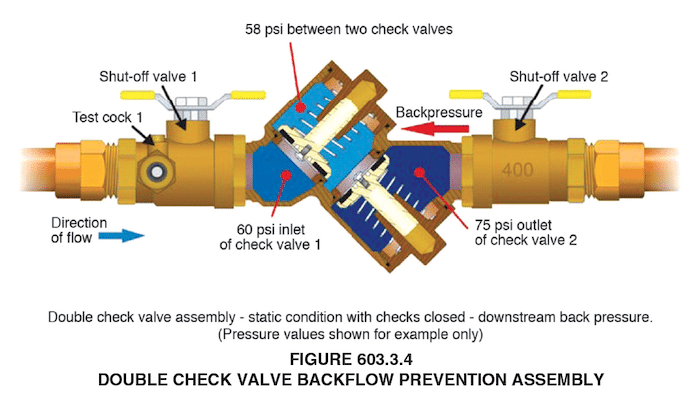
● Private Fire Protection Services: Fire sprinkler systems, while crucial for safety, can also pose a backflow risk. The water in these lines can become stagnant or contain chemicals used in the system, which could be siphoned back into the drinking water supply during a pressure drop. Therefore, dedicated backflow prevention devices, such as a double check valve assembly or a reduced pressure principle assembly, are a mandatory component of any private fire protection service connected to the city's water mains.
The Gold Standard of Protection: RPZ and Double Check Detector Assemblies
For high-hazard applications where the potential for contamination is a serious concern, the Reduced Pressure Zone (RPZ) assembly is a common device. An RPZ is a sophisticated mechanical assembly that provides the highest level of protection against both backpressure and backsiphonage.
Here's how an RPZ works:
1. Two Check Valves: Like other backflow preventers, an RPZ has two independently operating, spring-loaded check valves that allow water to flow in only one direction.
2. Reduced Pressure Zone: Between these two check valves is a "reduced pressure zone" where the pressure is always kept lower than the supply pressure.
3. Pressure Differential Relief Valve: This is the key component that makes the RPZ so effective. If either of the two check valves fails, or if a backflow event causes the pressure in the reduced pressure zone to increase, a relief valve is triggered. This valve opens and discharges the water to the atmosphere, preventing any contaminated water from entering the public supply.
The beauty of the RPZ is its "fail-safe" design. If something goes wrong, the device will visibly discharge water, providing an immediate and clear indication that there is a problem. These devices are often found within a building’s utility closet in a floor sink.
The Role of Double Check Detector Assemblies and Concrete Vaults
For private fire protection systems a Double Check Detector Assembly (DCDA) is often required. These devices are similar to a standard double check valve assembly, featuring two independent check valves. The "detector" component is a small, parallel water meter and bypass line that can detect very low flows, such as those caused by a leaking check valve or an unauthorized tap on the fire line. This early detection is critical for maintaining system integrity and preventing water loss.
Because these assemblies are exposed to the elements and need to be easily accessible for annual testing and maintenance, they are typically installed in durable, precast concrete vaults. These vaults serve several important purposes:
● Protection: They shield the backflow device from damage caused by weather, traffic, or other external factors.
● Accessibility: The vault's lid or hatch allows certified testers to easily access the device's test cocks and valves for the mandatory annual inspection.
● Security: A locked vault prevents unauthorized access and tampering with the fire protection system and water line.
The use of these external concrete vaults for fire service connections is a standard practice throughout the Kansas City metro, ensuring that both the water supply and the fire protection system are properly protected and maintained.
The Role of Annual Testing
Installation is only the first step. Because backflow prevention devices are mechanical assemblies with springs, check valves, and other components that can wear out over time, they must be regularly maintained and tested to ensure they are functioning properly.
Kansas City regulations, including those from KC Water and other regional water providers like WaterOne, mandate that all testable backflow prevention assemblies be inspected and tested annually by a certified backflow assembly tester. These tests ensure the devices will work as intended during a backflow event, protecting the integrity of the entire water system.
In conclusion, backflow prevention is a non-negotiable requirement for all new and existing developments in the Kansas City metro. It's a proactive and preventative measure that protects the health and safety of the entire community by ensuring the drinking water supply remains clean and free of contamination. Developers, business owners, and homeowners alike play a crucial role in upholding this standard, from initial installation to annual testing.
“At Davidson A+E, we work closely with the plumbing engineer to ensure that the proper backflow prevention devices are incorporated into the service utility design layout and meet, or exceed, any applicable code requirements from the AHJs and their respective Cross-Connection Control related policies.”, said Luke McIntosh, PE.


Comments